Who we are
ITHAKA is composed of innovators in many fields, united in our efforts to make education more accessible, affordable, and effective for everyone.
Employee spotlight

ITHAKA: Of our five core values, which resonates most with you?
Lenny: Trust. It feels good knowing there are multiple teams across the organization who are experts in their own fields, in their own departments, in their own kinds of specialties, who are just a call away.
I am the Account Development Manager on the International team. My job allows me to tap into my previous experience as a librarian and archivist, which I love. I enjoy engaging directly with those communities.
My primary motivation is knowing that I am able to help institutions through difficult decision-making processes. We’ve been offering expanded access to thousands of librarians across the world, dating back to March 2020. It’s really nice to talk about our charitable mindset as an organization versus always having sales-based conversations.

ITHAKA: What do you enjoy most about your job?
Esther: I love learning new things and challenging myself. When I started I was kind of intimidated! Everyone here is so smart. So, I thought, “I have to up my game here!” But everyone is also very encouraging. I appreciate open communication, and that’s what you get here. Lots of support and clear communication.
Working in an environment that encourages career development has positively impacted my professional and personal life. At ITHAKA you are encouraged to learn, get uncomfortable, and investigate new experiences. For instance, after looking into business analytics, I got better at organizing my everyday life! We often have these impulses to learn things and get better, but we get bogged down. So if there is another person, especially a manager, who’s telling you “No, you should go do that!” — it prompts you to take the time and focus on whatever it is you want to learn or get better at.

ITHAKA: What surprises you most about being a Senior QA Engineer at ITHAKA?
Aparna: “I have a journalism degree! That’s my background. To see how far I’ve come, from new-hire-without-a-computer-science-degree to senior-level engineer, is pretty crazy when you think about it.”
My first experience with Agile coaching was really fun. I like doing things that help people. And doing things like that — playing around in different areas of work, trying new things — is supported and encouraged here. Seeing the work that came to fruition at the end of a sprint was like, “We have this thing that we deliver! That is so cool!”
It can be scary to meet with your supervisor and say, “I’m not sure I want to do coding forever.” But here, managers want to know what your interests are, how they can help you. They are very supportive in that way. Being able to have open, honest conversations really leads to trust.
It’s been eleven years and I am still excited to go to work everyday. There’s always something to figure out. There’s always something we’re trying to do better. I don’t know of any other organizations that welcome, say, reaching out to its president to share your thoughts on something. Here, I know that if I emailed Kevin Guthrie, he would read it, take it seriously, and open up a conversation about it. I never feel lost on projects because of that transparency around what we’re all trying to achieve and how we all work to get there.
Our leadership

Kevin M. Guthrie is an executive and entrepreneur with expertise in high technology and not-for-profit management. Kevin was the founding president of JSTOR (1995) and Ithaka (2004). The organizations merged in 2009, becoming known as ITHAKA and continuing under his leadership. Today, Kevin leads the ITHAKA staff of more than 300 people, empowering a diverse set of teams from technologists and designers to content experts and researchers.
Previously Kevin co-founded a software development company serving the needs of college and professional football teams, and later served as a research associate at the Andrew W. Mellon Foundation, where he authored The New-York Historical Society: Lessons from One Nonprofit’s Long Struggle for Survival (Jossey Bass). In 2017 Kevin edited Ever the Leader: Selected Writings (1995–2016) William G. Bowen (Princeton University Press). His wide-ranging background also includes experience as a professional football player, a sports broadcaster and producer, and a consultant for the Oscar-winning motion picture Rain Man (1988).
Kevin serves on several advisory committees and boards including the boards for Educational Testing Service (ETS), Princeton University’s Keller Center for Entrepreneurship and Innovation, and Anno/Hypothesis.
Kevin holds a bachelor’s in civil engineering from Princeton University and a master of business administration from Columbia University.


Nancy Kopans is vice president, general counsel, and secretary of ITHAKA, overseeing the organization’s legal, compliance, and governance needs. She has served on many copyright and tax-exempt organization committees, as well as boards of directors.
Nancy holds a bachelor of arts in earth sciences from Dartmouth College, a master of arts and master of philosophy in English from Columbia University, and a juris doctor from Georgetown University.

As ITHAKA’s chief operating officer, Nathalie Udo oversees our Brand & Communications, Finance, Legal, Work Life & Culture, Organizational Transformation, and Partner Services & Operations units. She brings an impact-oriented approach to improving how work gets done, and leverages people’s skills and passions to nurture deep engagement with our work.
Before officially joining ITHAKA in 2019, Nathalie managed a major capital program to build ITHAKA’s new technology platform in 2014, and later partnered with senior leadership to implement OKRs to guide and align our work. Through her business consultancy—InDepth Strategies, LLC—she has helped organizations like Royal Dutch Airlines, New England Journal of Medicine, and Alcatel-Lucent with strategic planning, executive coaching, leadership, and organizational change.
Nathalie holds a master’s degree in economics and business administration from University of Maastricht, Netherlands, and is a Certified Professional Co-Active Coach (CPCC®), a certified Project Management Professional (PMP®), and a Certified Scrum Master (CSM®). She is coauthor of Organizational Survival: Profitable Strategies for a Sustainable Future (McGraw-Hill, 2013) and contributed to Scrappy Women in Business: Living Proof that Bending the Rules Isn’t Breaking the Law (Happy About, 2010). Driven by her passion for the oceans and the planet, Nathalie serves as chair of the boards of the Marine Conservation Institute and Heirs To Our Oceans.

As managing director, Martin leads Ithaka S+R’s team and strategy, providing insights and innovation to education leaders and policymakers in service of ITHAKA’s mission to increase access to knowledge. Before stepping into the managing director role, Martin served Ithaka S+R for more than 10 years as vice president and director, overseeing a broad portfolio of research, cross-institutional initiatives, product development, and technical assistance on topics such as student debt, credit mobility, data-informed retention and success, education–workforce alignment, and the use of technology in teaching and advising. He has launched and led numerous high-impact Ithaka S+R projects, including signature efforts such as the Ohio College Comeback Compact, Holistic Credit Mobility, Transfer Explorer, and the American Talent Initiative.
A graduate of Harvard College and Harvard Law School, Martin has spent most of his career in education research and policy. Prior to joining Ithaka S+R in 2014, he was an academic fellow at Columbia Law School, where his research and teaching focused on administrative law, federalism, and organizational governance in the context of K-12 and higher education. Earlier in his career, Martin was senior executive director for research, accountability, and data at the New York City Department of Education, where he oversaw school evaluation and internal and external research for the 1.1-million-student district. As a researcher at the Mellon Foundation, Martin studied higher education equity, finance, and sports, among other topics. As a practicing lawyer, Martin clerked for Judge Pierre Leval of the US Court of Appeals for the Second Circuit and worked as a litigator at Wachtell, Lipton, Rosen, and Katz.
Martin has published dozens of reports, articles, commentaries, and book chapters on a wide range of education-related topics in both academic and popular venues. He is the coauthor of Equity and Excellence in American Higher Education, which received the 2006 American Educational Research Association Outstanding Book Award.

Roger Schonfeld is the managing director for JSTOR Digital Stewardship Services. Launched in 2025, JSTOR Stewardship is a service through which libraries can manage, preserve, and provide access to their archives and special collections, with transformative opportunities to accelerate their collections processing productivity and increase their collections’ usage and impact. Roger is also responsible for ITHAKA’s overall organizational strategy.
Throughout his career, much of Roger’s work has focused on innovation and sustainability for the shared infrastructure that makes possible the work of libraries, publishers, museums, and the research enterprise. At Ithaka S+R, Roger developed research and advisory programs that helped libraries and publishers transform their service offerings based on the needs of users and changes in the information marketplace.
Roger is an author of the 2024 Ithaka S+R report on “The Second Digital Transformation of Scholarly Publishing: Strategic Context and Shared Infrastructure.” With Deanna Marcum, he wrote Along Came Google: A History of Library Digitization (Princeton University Press, 2021), examining structural impediments to digital strategy and the role of an outside catalyst in fostering digitization among research libraries. He also wrote JSTOR: A History (Princeton, 2003), focusing on the development of a sustainable not-for-profit initiative for the digitization and preservation of scholarly texts.
Roger blogs regularly about libraries and publishing at the Scholarly Kitchen, and currently serves as a board member for the Center for Research Libraries. Previously, he has served on the NSF Blue Ribbon Task Force for Sustainable Digital Preservation and Access and NISO’s Open Discovery Initiative. Roger has testified before the US House of Representatives on government publishing, advocating for strong approaches to digital preservation.
Roger was previously a research associate at the Andrew W. Mellon Foundation, where he collaborated on The Game of Life: College Sports and Academic Values with James Shulman and William G. Bowen (Princeton, 2000). He was an Association of Research Libraries Leadership Fellow and received degrees in library and information science from Syracuse University and in English literature from Yale University.

Kate Wittenberg is the managing director of Portico. She oversees execution of a strategic vision that’s deeply informed by the role of scholarly publishers and academic libraries, and responds to demonstrated preservation needs of the international higher education community.
Working with the Portico team, Kate develops strategy as shifts in scholarly publishing, higher education, or other sectors present new needs, opportunities, and challenges for publishers, libraries, college and university administrators, and government agencies.
Kate holds a bachelor’s in English from Wesleyan University.

As vice president of work life and culture, Debbie leads a team of talented professionals who are responsible for building and maintaining a vibrant and positive organizational culture for all of the people who work here. In addition, her team provides all human resources functions, including recruitment, benefits, employee relations, compensation, organizational development, and staff effectiveness.
Prior to joining ITHAKA, Debbie worked in human resources for over 15 years, with diversified experience in organizations of varied sizes and industries.
Debbie is committed to nurturing an environment of continuous learning, personally and professionally. She holds a bachelor of science in management, business administration from Montclair State University and a master of business administration, human resources management from Fairleigh Dickinson University.


As vice president of product engineering, Alison leads the technical design, development, and delivery of ITHAKA’s digital products, ensuring teams can reliably bring high-quality capabilities from idea to impact. She partners closely with product, design, and organizational leaders to enable scalable, secure, resilient platforms that support continuous product delivery in service of ITHAKA’s mission.
Alison brings a strong foundation in operational excellence and quality engineering to her work, shaped by her leadership of organization-wide efforts to improve delivery, strengthen change management, and foster continuous improvement. Her approach to product engineering emphasizes craftsmanship, accountability, and clear ownership, supported by evidence-based decision-making—balancing innovation with operational rigor to help teams deliver value sustainably and with confidence.
Before joining ITHAKA, Alison held a variety of technology and leadership roles across the healthcare, media, and higher education sectors. She holds a bachelor’s in business administration with a focus on applied computer science. Her background in software engineering, quality practices, and business operations enables her to navigate complex technical and organizational challenges while empowering teams to deliver meaningful outcomes for users.
Alison has a longstanding commitment to community service and has been involved in youth leadership, athletics coaching, and fundraising efforts supporting organ transplant causes. In her free time, she enjoys reading, camping, and spending time with her family and dogs on Lake Erie.

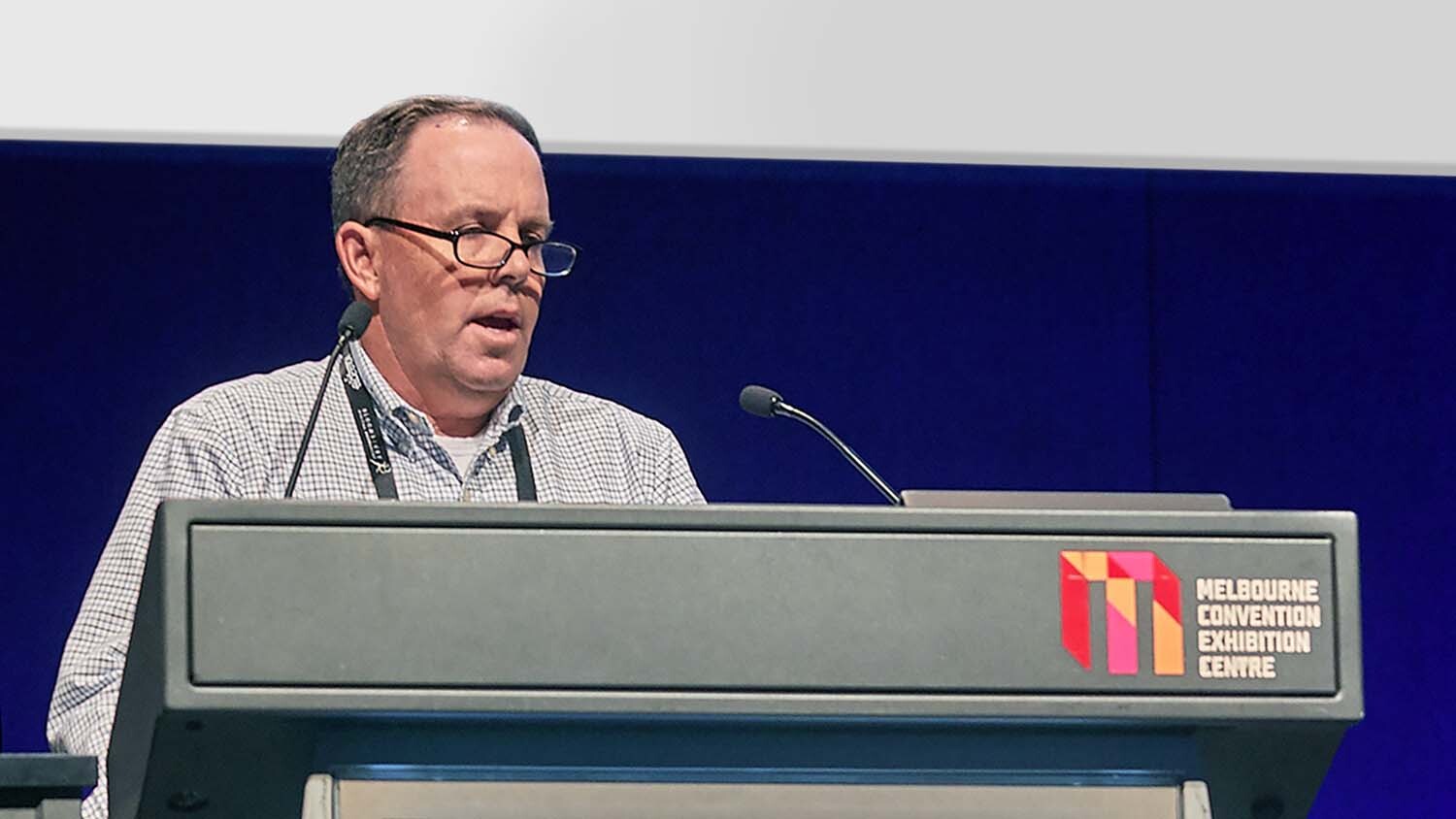
Bruce has almost forty years in the higher education and library communities, and currently leads the JSTOR Stewardship team. He works with libraries around the world to incorporate our digital stewardship services as an increasingly important component of their infrastructure, supporting teaching and research with their digital collections and archives.
Prior to this role, Bruce oversaw library outreach and access services globally for JSTOR and Portico. Under his leadership, JSTOR participation grew to more than 12,000 academic libraries, secondary schools, research organizations and NGOs, and public libraries in 170 countries, including almost 70 where JSTOR access is free. He has led outreach for Portico since its inception, and more than 1,000 libraries now support our critical work to preserve digital content at scale.
Bruce was an application developer at Virginia Tech before joining VTLS in 1988. He held senior management positions at the resellers Faxon Company and Blackwells, and before joining JSTOR in 1999 he was executive director of SunGard SCT’s higher education consulting practice.
Bruce has written and presented extensively on information management issues, and is active in the Coalition for Networked Information (CNI). He previously served on the National Information Standards Organization (NISO) board, serving as chair; the Board of Trustees for the Barrington (RI) Public Library; and the UKSG Editorial Committee. He currently serves as the chair of the Dean’s Advisory Committee for the libraries at Virginia Tech and a vice president of the Rhode Island Golf Association. He holds a bachelor’s in management from Virginia Tech, and a master of business administration from the Pamplin School at Virginia Tech.


Alex Humphreys is vice president of innovation at ITHAKA, where he leads JSTOR Labs, a team that scouts new ways to expand access to education and knowledge using research and development, product discovery, lean business development, and service incubation. JSTOR Labs partners with colleagues in Ithaka S+R and JSTOR along with higher education institutions, funders, community organizations, publishers, and libraries to develop and test interventions and achieve impact that can scale.
JSTOR Labs incubates promising new services such as Transfer Explorer, a service to help students and those who support them see how their course credits and prior learning experiences will transfer and count, and the JSTOR Access in Prison Initiative, which provides library resources to incarcerated learners.
The Labs team also discovers and develops strategic partnerships, investments, and acquisitions that complement and are aligned with ITHAKA’s mission. For example, ITHAKA invested in and partnered with Perlego, a startup that improves student success by providing affordable access to more than 1 million textbooks through an easy-to-use, tool-rich digital library.
Before launching JSTOR Labs, Alex spearheaded the effort to replace JSTOR’s platform with a cloud-hosted, services-oriented, open-source-based architecture. Prior to his time at ITHAKA, Alex worked at Oxford University Press, Inc., where he built an award-winning publishing platform for OUP’s subscription-based websites. Alex graduated from Hamilton College and holds a master’s in creative writing from Hunter College. He is the coach of ITHAKA’s mighty softball team, the Ithakapokalypse.

As vice president of published content, John collaborates with publishers, libraries, and museums to develop products and programs that support their organizational needs and missions, such as Books at JSTOR and Artstor on JSTOR. He works with more than 2,000 publishers to make their content available on the JSTOR platform. He also works closely with libraries to develop growth strategies for the journals and books programs to ensure we meet their research, teaching, and preservation needs. This includes the recent business models in our Books at JSTOR program built in collaboration with the academic community, including Path to Open and Publisher Collections.
Prior to this role, John led our global Outreach team working with libraries and consortia in 170 countries. He also played a pivotal role in launching and growing both library and publisher participation in the Books at JSTOR program. John has over 25 years of experience in the library community. He worked with SoftLine Information to bring ethnic newspapers online and spent 10 years at ProQuest in a variety of roles collaborating with publishers and the library communities.
John was an instructor at Moorpark College for over 12 years and established the first online course at the college, introducing electronic resources into the classroom to expand student learning. He holds a master’s degree in academic research from Humboldt State University and a master of business administration from the Merrick School of Business at the University of Baltimore. John presently holds a position on the Board of Trustees for OA Book Usage Data Trust.

Heidi McGregor is vice president of brand and communications at ITHAKA, where she’s responsible for the organization’s brand identity, reputation, and messaging. She leads communications strategy, including all major initiatives, and ensures internal and external communications across the ITHAKA portfolio are mission-focused and brand-aligned, support business goals, and strengthen ITHAKA’s reputation.
Heidi has worked at ITHAKA since 1998, and over the past 16 years has led teams focused on communications and marketing activities across ITHAKA’s portfolio of services (Ithaka S+R, JSTOR, and Portico). Prior to that, she served as JSTOR’s director of strategy and director of publisher relations. Throughout her career, Heidi has been a passionate champion of ITHAKA’s mission, built productive teams of professionals to help the organization and its services thrive, and spearheaded major strategic initiatives. Before coming to ITHAKA, Heidi began her career at Simon & Schuster.
Heidi holds a bachelor’s in political science and philosophy from Lafayette College and was a member of the first graduating class in the Media Management Certificate Program at the New School University.


Susan is vice president of partner services and operations at ITHAKA. In this role, she leads teams that provide essential organization-wide services, including content operations, technology services, outreach support, enterprise operations, partner and user support, and education services for both JSTOR and Stewardship Services. Together, these teams provide the resources and solutions that facilitate the daily work of our colleagues, partners, contributors, and users, and enable the successful operation of the organization’s core services.
Susan’s work is centered on building strong cultural and operational foundations that enable effective collaboration, sustained engagement, and continuous improvement across the organization. She is deeply committed to delivering excellent service, strengthening partnerships, and developing high-performing teams grounded in trust, accountability, and shared purpose.
Before joining ITHAKA, Susan held positions at Kellogg Company and Borders Group, leading large regional sales teams and company-wide technical support. Susan is passionate about delivering an exceptional customer experience and developing high-performing teams with cultures of trust and accountability. Susan holds a bachelor’s degree in business management from Sullivan University.


Rebecca Seger is a seasoned leader in scholarly communication and library engagement, driving global outreach and institutional partnerships for ITHAKA’s core programs, including JSTOR, Artstor on JSTOR, and Portico. She joined ITHAKA in 2019 and leads a global team focused on expanding and strengthening relationships with libraries and research organizations across more than 170 countries.
With a publishing career spanning over three decades, Rebecca brings deep expertise in digital product strategy, market development, and community engagement to the ITHAKA team. From 2000 to 2019 she held a series of leadership roles at Oxford University Press. There, she worked on teams that drove product development and strategic outreach for ebooks, databases, and journals and was a key contributor to initiatives such as University Press Scholarship Online, Oxford Reference Online, and Oxford Scholarly Editions Online.
Earlier in her career, Rebecca worked with major scholarly and educational publishers including McGraw-Hill, Elsevier, and HarperCollins, strengthening relationships with academic, research, and public library communities.
An active contributor to industry dialogue, Rebecca has chaired the AAP/ALCTS Joint Publisher/Librarian Committee and is a frequent speaker on topics at the intersection of publishing and libraries. Her professional presentations and panels include leading industry events such as the Charleston Conference, American Library Association (ALA), Association of College & Research Libraries (ACRL), Electronic Resources & Libraries (ER&L), UKSG, and seminars hosted by the Association of American Publishers and Association of University Presses.
Rebecca’s work reflects a commitment to expanding access to knowledge through sustainable partnerships and innovation in scholarly communications.

As senior vice president of product, Michael Vath oversees research, strategy, design, and development across JSTOR’s portfolio of software products, most notably the JSTOR teaching and research platform and JSTOR Digital Stewardship Services. Before stepping into this role, Michael served ITHAKA for 15 years in a variety of product leadership roles, most recently as the senior director of product management.
Throughout his career, Michael has focused on the importance of strong leadership and communication as the key to product success, providing teams with context, outcomes, and strategies, enabling and empowering them to make good decisions and deliver results. He has worked on a wide range of commercial products, including advertising systems, accounting & POS, web CMS systems, B2C e-commerce products, and more. He loves teaching, and mentors startups and budding product leaders in his community.
Michael holds a bachelor’s in mathematics from the University of Notre Dame, and a master’s in mathematics from the University of Michigan.